

Location – Daidai Rd, Nairobi, Kenya
Website – http://www.littlehearts.co.ke/
Contact – +254 704 152832
For young children, education is about far more than preparing for the next classroom. It is about developing curiosity, confidence, independence, communication, and the ability to understand and engage with the world around them. At Little Hearts Kindergarten, this philosophy has shaped a child-centred educational approach developed and continually improved over 27 years.
Serving children from 1½ to 6 years, the school combines Montessori principles with the learning objectives and competencies of Kenya’s Competency-Based Education (CBE) curriculum, while also building foundations for children who may later progress into international pathways such as IGCSE.
Learning Through Exploration, Discovery, and Experience
At Little Hearts Kindergarten, the belief is that young children learn best through active involvement. Exploration, movement, play, discovery, and hands-on experiences are therefore central to the school’s educational philosophy.
The school uses activity-based, experiential, and inquiry-led learning, encouraging children to ask questions, investigate, make choices, and discover solutions. Rather than expecting every child to learn in exactly the same way, teachers create opportunities for children to engage with learning through practical experiences and meaningful activities.
This approach supports the development of literacy, numeracy, communication, creativity, confidence, independence, and problem-solving skills. It also helps children adapt comfortably to both the CBE system and international educational pathways.
An Inclusive Community Where Every Child Belongs
Little Hearts Kindergarten believes every child deserves to feel welcomed, respected, understood, and valued. Its community includes children from diverse family, cultural, and linguistic backgrounds, with this diversity regarded as an important part of the educational experience.
Through stories, songs, celebrations, art, discussions, and themed activities, children are introduced to different cultures and traditions in age-appropriate ways. They are encouraged to share their own experiences while learning to appreciate and respect those of others.
Inclusivity also extends to the classroom. Children develop at different rates and bring different strengths, interests, personalities, abilities, and learning needs. Teachers therefore support each child according to their stage of development while ensuring that they remain part of the wider class community.
“The aim is for every child to experience a genuine sense of belonging.”
Connecting Children with the World Around Them
Little Hearts Kindergarten believes memorable learning happens when children can connect classroom experiences with the world around them. As an early years school, its collaborations focus on meaningful and age-appropriate experiences beyond conventional classroom learning.
Where appropriate, the school engages community members, professionals, businesses, and organisations through educational visits, demonstrations, guest interactions, and special activities.
Parents are also considered important partners. The parent community represents a wide range of professions, skills, and experiences, creating opportunities for children to be introduced to different occupations and community roles.
Strong Communication Between School and Home
In early childhood education, communication between school and family is particularly important because parents and teachers share responsibility for supporting a child’s development.
At Little Hearts Kindergarten, teachers and management communicate through staff meetings, planning sessions, classroom reviews, and discussions about children’s progress and individual needs. This collaborative approach promotes consistency in care, guidance, and learning.
Parents are kept informed through meetings, school notices, individual consultations, and appropriate digital communication channels. Communication is deliberately two-way, with parents encouraged to share observations, concerns, milestones, and information about their child’s interests.
Teachers also practise active listening and observation, giving children opportunities to express their ideas, experiences, needs, and emotions.
Meeting Every Child’s Individual Needs
Children between 1½ and 6 years can differ significantly in language development, independence, social confidence, physical development, and previous learning experiences. Little Hearts Kindergarten recognises these differences rather than expecting every child to progress at exactly the same pace.
Teachers continuously observe children’s development to identify individual strengths and areas requiring additional guidance. Activities can then be adapted through differentiated tasks, individual guidance, small-group work, repetition, and practical materials.
For children developing English or coming from different linguistic backgrounds, teachers use visual materials, gestures, repetition, songs, stories, conversation, and demonstrations to make learning accessible.
This responsive approach allows children to receive support according to their individual stage of development while remaining active members of the classroom community.
Well-Being at the Heart of Early Learning
At the early years stage, emotional well-being is closely connected to learning. Little Hearts Kindergarten therefore prioritises creating a safe, nurturing, happy, and positive environment where children feel secure, respected, and comfortable being themselves.
Teachers build positive relationships with children and pay attention to changes in behaviour, mood, participation, and social interaction. Children are encouraged to communicate their feelings and are guided towards age-appropriate ways of managing emotions, sharing, cooperating, and resolving disagreements.
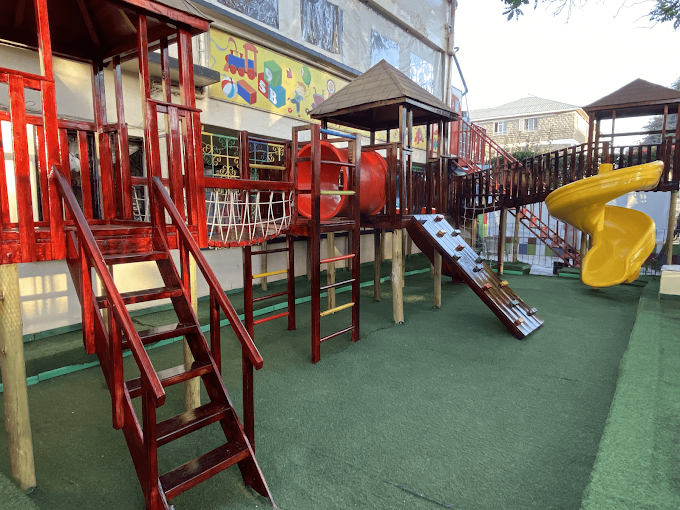
Play, outdoor activities, sport, music, creative expression, and positive social interaction all contribute to children’s physical and emotional well-being. Where concerns arise, the school works closely with parents.
Encouraging Creativity and Independent Thinking
Creativity, critical thinking, and problem-solving are incorporated into classroom learning and extracurricular activities rather than treated as separate subjects.
Through project- and theme-based learning, children engage with stories, art, music, experiments, construction, puzzles, practical activities, and exploration. Montessori materials encourage children to sort, sequence, match, build, and solve problems independently.
Importantly, children are encouraged to make mistakes, reconsider their approach, and try again. This helps develop persistence and confidence.
Teachers use open-ended questions such as “What do you think will happen?” and “Is there another way we could do this?” to encourage reasoning and independent ideas.
The school’s hula-hooping club develops balance, coordination, concentration, and gross motor skills, while skating supports balance, spatial awareness, perseverance, confidence, and coordination. Together, these experiences support CBE competencies and Montessori principles of independence and self-directed learning.
Purposeful Technology in the Early Years
Technology is an increasingly important part of the world children are growing into, but Little Hearts Kindergarten believes that early exposure should be purposeful, supervised, and age-appropriate.
The school’s dedicated IT lab provides children with opportunities to develop basic computer awareness and digital skills in a structured educational environment. Carefully selected activities introduce children to technology while supporting visual and auditory learning.
However, technology is intended to enhance rather than replace fundamental early childhood experiences. The school maintains a healthy balance between digital exposure and physical learning. Children continue to manipulate real materials, write and draw, interact with teachers and classmates, play outdoors, participate in sport, and develop practical and social skills.
Academic Foundations Without Unnecessary Pressure
For Little Hearts Kindergarten, academic excellence in the early years extends beyond how quickly a child can read, write, or count. Strong foundations in literacy and numeracy are essential, but school readiness also includes concentration, communication, confidence, independence, coordination, curiosity, responsibility, and the ability to work with others.
Teachers monitor progress through continuous observation, classroom activities, practical work, developmental milestones, and age-appropriate assessments. Where children require additional reinforcement or greater challenge, learning is adapted accordingly.
By combining CBE competencies with Montessori-based learning, the school creates a structured environment that supports academic foundations and independent learning without placing unnecessary pressure on young children.
Looking Ahead: Preparing Children for a Lifetime of Learning
Looking to the future, Little Hearts Kindergarten aims to continue developing high-quality, progressive early years education that combines Montessori-based learning with Kenya’s CBE framework while preparing children for both local and international pathways, including IGCSE.
The school intends to strengthen experiential and project-based learning, outdoor education, technology, creativity, sport, and music, while expanding opportunities for children to develop communication, teamwork, resilience, and leadership.
Continuous professional development for teachers will remain a priority. As educational approaches evolve, educators must continue learning and developing their practice while retaining the warmth, personal attention, and child-centred philosophy that define the school.
Ultimately, Little Hearts Kindergarten’s vision extends beyond preparing children for their next classroom. It is about preparing them for a lifetime of learning by giving every child strong academic, social, emotional, and physical foundations, together with the confidence, character, independence, creativity, and adaptability needed to flourish wherever their educational journey takes them.