

Category: Uncategorized
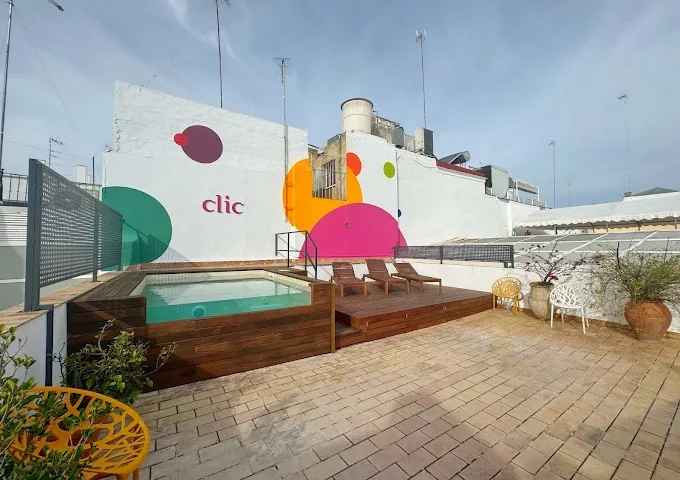
CLIC International House: A Global Leader in Language Education
Location – C. Albareda, 19, Casco Antiguo, 41001 Sevilla, Spain
Website – https://clic.es/seville/
Contact – +34 954 50 21 31
Introduction
Language acquisition is a doorway to new cultures, possibilities, and self-improvement. Leading the way in this learning experience in Spain is CLIC International House, one of Spain’s most renowned language schools. Founded in 1983 in Seville by Bernhard Roters, a native German who became enamored with the city, CLIC has grown its reach, opening offices in Cádiz in 2004 and Málaga in 2017.
With a fierce determination for excellence, diversity, and innovation, CLIC International House has established itself as a center of quality language learning that provides an enriching and multicultural experience. The school now receives students from more than 60 nations and offers a genuinely international experience.
A Multilingual Hub for Language Learning
CLIC International House provides a wide variety of language courses for both foreign and domestic students. The institution teaches Spanish to foreigners in addition to teaching English, French, German, Italian, and Portuguese to the domestic population. This variety of courses encourages an experiential language exchange that elevates the learning experience for every student.
The school accommodates different learner profiles by providing:
- Intensive and long courses for those that look for quick improvement.
- Personalized business English and Spanish courses for professionals.
- Specially designed courses for young learners, adults, and corporate clients.
- Exam preparation courses for prestigious certifications like DELE, SIELE, and CCSE for Spanish, and Cambridge University certificates for English as a foreign language.
By offering personalized programs, CLIC guarantees that each student discovers a course that suits their learning style, goals, and professional intentions.
Innovative and Interactive Teaching Methodology
One of the most distinguishing features of CLIC International House is its distinctive student-orientated teaching style. Keeping with the International House model, CLIC takes a communicative and participative stance, where students are kept central to the learning experience.
Students begin using real-life language right from the first day, with the practical application going beyond exercises in grammar and vocabulary. The learning process is supplemented with:
- Face-to-face classes supported with practical exercises
- Group activities that promote collaborative learning.
- Multimedia resources and digital tools to cater to various learning styles.
This method not only makes language learning more interactive but also enhances the confidence and fluency of the students, readying them to apply the language in practical contexts.
Highly Qualified and Committed Teachers
At CLIC International House, high-quality education begins with outstanding teachers. The school takes care to have all teachers be highly qualified and university degree holders in education or linguistics. They also have specialized language teaching certifications like CELTA, DELTA, and FELE.
To maintain a high standard of teaching, CLIC emphasizes continuous professional development. Instructors regularly participate in training sessions and stay updated on the latest teaching methodologies. This commitment to excellence guarantees that students receive the best possible guidance on their language-learning journey.
Beyond the Classroom: Immersive and Cultural Learning
CLIC International House recognizes that language acquisition is not simply a matter of learning words and grammar—it’s living the culture. The school provides a rich cultural immersion program, where students learn from their own experiences.
Some of these programs are:
Excursions and city tours: Trips to Seville’s monuments, the coastal town’s character of Cádiz, and the lively energy of Málaga.
Cultural workshops: Such as flamenco lessons, Spanish cuisine classes, and local customs
Language exchange programs: Merging students with locals so they can practice their language skills in real-life situations.
Full-day excursions to famous sites: Places like Granada, Córdoba, Cádiz, and even Morocco, where students can experience rich cultural environments.
By combining formal learning with real-life experiences, CLIC makes sure that students not only acquire a language but also gain an intense appreciation for culture and a global mindset.
Technology and Digital Learning Integration
In the modern digital age, CLIC International House welcomes technology as an essential instrument in language learning. The school incorporates several digital learning platforms, interactive programs, and online materials that complement learning outside the classroom.
Some of the major technological elements are:
- Interactive whiteboards to support visual and auditory learning.
- Learning apps and language learning games for independent practice.
- Virtual simulations and role-playing activities to get students ready for actual conversations.
By integrating technology, CLIC offers a dynamic and flexible learning environment, which responds to contemporary learners’ requirements.
Accreditation and International Recognition
CLIC International House is among the only language schools in southern Spain to enjoy dual IALC and International House membership, as well as the Instituto Cervantes accreditation. These esteemed affiliations reflect CLIC’s commitment to excellence in language teaching.
Furthermore, CLIC is also an authorized test center for several international language certifications, which only adds to its reputation as a world-class language proficiency testing institution.
A Legacy of Success: Student Testimonials
The effect of CLIC’s programs is best appreciated through the experience of its students. One such outstanding success is Hiromi of Japan, who came to CLIC with very little Spanish ability. She took an intensive course, mixing general Spanish classes with DELE exam preparation.
After successfully passing the exam, Hiromi not only gained fluency but also secured a job with an international company, attributing her success to the practical learning approach and constant encouragement from CLIC’s instructors. Stories like Hiromi’s reflect the transformative power of CLIC’s methodology and personalized learning experience.
Future Growth and Expansion Plans
Looking forward, CLIC International House will continue to increase its products and services while solidifying itself as a forerunner in language learning. The school wants to:
- Roll out new languages to serve an even wider group of students.
- Develop more electronic learning aids to increase accessibility.
- Foster deeper international alliances in order to deliver global learning options for students.
- Increase its Erasmus+ teacher and professional development programs to service educators and professionals across the world.
With a vision for the future, CLIC keeps on growing, providing students with the best language training in Spain.
Conclusion
For more than four decades, CLIC International House has been a shining example of excellence in language teaching, hosting students from all over the world to discover the beauty of the Spanish language and culture.
Using unique teaching techniques, world-renowned instructors, realistic cultural immersion, and state-of-the-art equipment, CLIC offers an incredible learning experience. Whether a learner wants to study a new language for professional opportunity, travel purposes, or enriching personal enjoyment, CLIC is the optimal setting to achieve fluency and confidence.
With Bernhard Roters’ spirit continued by his daughter Blanca and the passionate team at CLIC, the school continues to be a leader in language instruction, crafting the multilingual future, one student at a time.
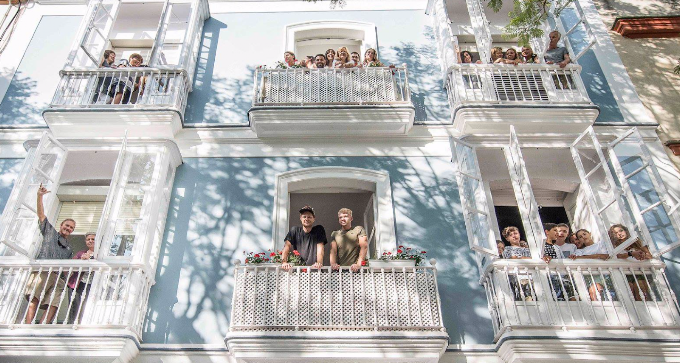
K2 Internacional: Where Words Become Memories
Location – Pl. del Mentidero, 19, 11003 Cádiz, Spain
Website – http://www.k2internacional.com/
Contact – +34 956 21 26 46
When Yolanda and Ángeles Castro returned to Spain after living and studying in London, they brought home more than memories of another country. They brought with them a vision.
Inspired by their own experience of learning through immersion, culture, and human connection, the two sisters dreamed of creating a place where international students could experience Spanish in the same meaningful way. Their father offered simple but powerful advice: “If you want something, just start, and solve the problems as they come.” They followed that advice, and in 2000, K2 Internacional was born in the historic city of Cádiz.
What began as a small project has evolved into a respected Spanish language school that has welcomed more than 10,000 students from around the world. Yet despite its growth, the school’s philosophy remains unchanged. Its mission is not simply to teach a language but to create experiences that transform the way people connect with the world.
That philosophy is perfectly captured in the school’s slogan: “Where Words Become Memories.”
A Different Approach to Language Learning
K2 Internacional specializes in teaching Spanish as a foreign language through a communicative, immersive, and highly personalized approach. The school offers intensive Spanish courses, private lessons, DELE and SIELE exam preparation, university and school group programs, teacher-training courses, and customized language experiences for students of all ages and backgrounds.
However, what truly distinguishes K2 Internacional is not the variety of courses it offers but the way students learn.
From their first day, students are encouraged to use Spanish in authentic situations. Lessons are designed around communication, interaction, and real-life experiences rather than memorization. Language is treated as a living tool for connection, expression, and cultural understanding.
For the team at K2 Internacional, learning Spanish should never be limited to textbooks or classroom walls.
When Cádiz Becomes Part of the Classroom
One of the school’s greatest strengths is its location. Situated in Cádiz, one of Europe’s oldest cities, K2 Internacional uses the city itself as an extension of the learning environment.
Students are immersed in local life through cultural activities, conversations with residents, historical visits, gastronomy experiences, flamenco workshops, and everyday interactions. This approach allows them to practice Spanish naturally while gaining a deeper understanding of Spanish culture and traditions.
The result is an educational experience that goes beyond language acquisition. Students develop confidence, independence, cultural awareness, and lasting memories.
At K2 Internacional, learning Spanish means living Spanish.
A Team Committed to Excellence
Behind every successful learning experience is a dedicated team of educators. K2 Internacional’s teachers are highly qualified native Spanish speakers with extensive experience teaching Spanish as a foreign language.
Professional development is an essential part of the school’s culture. Teachers regularly participate in training programs, collaborative projects, and continuous evaluation of teaching methodologies to ensure that students receive the highest quality education.
The school is particularly proud of José Gallego, one of its teachers, who was selected to deliver a specialized training program for educators within the EEA (Association of Spanish Schools in Andalusia). His course, “AI for Language Teaching,” explored how artificial intelligence can enhance education while maintaining the central role of teachers.
His message was clear: “AI does not replace teachers; it expands their reach.”
This philosophy reflects K2 Internacional’s broader educational approach. Innovation is welcomed, but technology is always viewed as a tool that supports human connection rather than replacing it.
Combining Innovation with Human Connection
Technology has become an important part of modern education, and K2 Internacional embraces digital tools that enhance the learning experience. Interactive platforms, online resources, and AI-supported solutions help students develop language skills more efficiently and independently.
Yet the school remains committed to preserving the human dimension of education.
The relationships between teachers and students, the confidence built through real conversations, and the emotional connections formed through cultural immersion remain at the center of everything K2 Internacional does.
For the school, technology is valuable only when it strengthens meaningful learning and authentic communication.
More Than a School Community
Beyond academics, K2 Internacional works hard to create a welcoming environment where students feel supported from the moment they arrive.
Accommodation assistance, airport transfers, cultural excursions, social events, and personalized guidance help students settle into life in Spain and make the most of their experience.
Many students describe the school as a second home. Friendships formed during their time in Cádiz often continue long after courses have ended, creating an international community connected by shared experiences and a love of language learning.
These relationships are one of the reasons why so many former students return to K2 Internacional or recommend the school to others.
A Reputation Built on Quality
Over the years, K2 Internacional has earned recognition for its commitment to excellence. The school is accredited by the Instituto Cervantes and is an active member of FEDELE, the Spanish Federation of Schools of Spanish as a Foreign Language.
In 2020, it received the award for Outstanding Language Centre in Andalusia, a recognition of its dedication to innovation, quality, and student success.
The school also collaborates with educational institutions and international agencies worldwide, while many of its programs are recognized within European initiatives such as Erasmus+ and Germany’s Bildungsurlaub educational leave program.
Looking Ahead While Staying True to Its Roots
As K2 Internacional prepares to celebrate its 25th anniversary in 2026, the school continues to look toward the future with the same entrepreneurial spirit that inspired its founders more than two decades ago.
Plans include expanding cultural immersion opportunities, strengthening international partnerships, developing multi-destination study experiences across Spain and Latin America, and continuing to explore new educational technologies that enhance student learning.
Yet despite these ambitions, the essence of K2 Internacional remains unchanged.
The school continues to believe that language learning is most powerful when it is personal, authentic, and deeply connected to culture and people.
For thousands of students who have passed through its doors, K2 Internacional has been more than a place to learn Spanish. It has been a place to discover new perspectives, build lifelong friendships, and create unforgettable experiences.
After all, at K2 Internacional, words do not simply teach a language.
They become memories.
Best Schools in Malaysia for Academic Excellence 2026
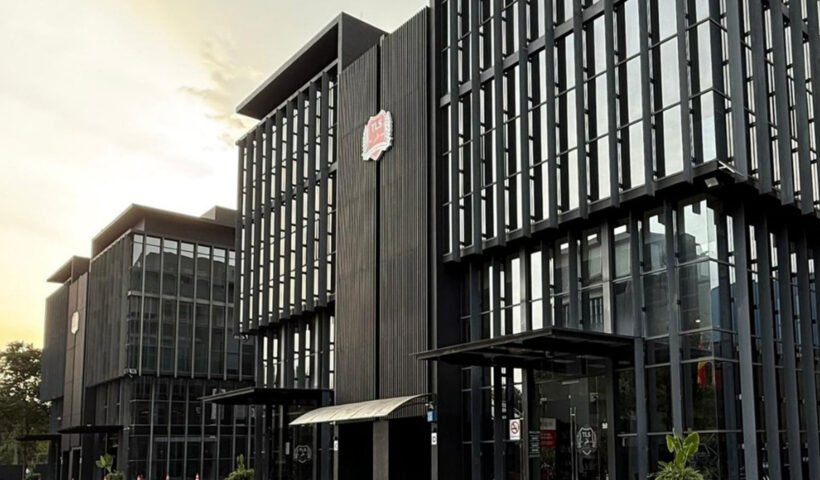
TLS International School: Redefining Learning Through Brain Science and Global Education
Location – 12, Lorong Teknologi C, PJU 5, Kota Damansara, 47810 Petaling Jaya, Selangor, Malaysia
Website – http://www.tlsinternational.edu.my/
Contact – +60 19-800 5638
In an era where education is rapidly evolving, schools are increasingly expected to do more than deliver academic knowledge. They must inspire curiosity, nurture emotional intelligence, develop critical thinkers, and prepare students to thrive in an interconnected world. At TLS International School, these principles are not simply aspirations—they are embedded in every aspect of the learning experience.
Recognised as Malaysia’s First Brain Science School, TLS International School has established itself as an innovative institution that combines academic excellence with brain-based learning to help every student reach their full potential. By integrating cognitive science into its teaching methodologies, the school creates an environment where students are actively engaged, emotionally supported, and equipped with the skills needed for lifelong success.
A Modern Approach to Learning
At the heart of TLS International School’s educational philosophy is the belief that meaningful learning occurs when students are challenged to think, explore, and apply knowledge in authentic contexts. Following the internationally recognised Cambridge curriculum, the school enriches classroom instruction through inquiry-based and project-based learning, encouraging students to become confident problem-solvers and independent thinkers.
Rather than relying solely on traditional teaching methods, lessons incorporate hands-on experiments, presentations, interdisciplinary projects, and collaborative activities that stimulate creativity while strengthening analytical and communication skills. Continuous assessment further enables teachers to identify individual learning needs and tailor instruction accordingly, ensuring every student receives the right balance of challenge and support.
Building a Truly Inclusive Learning Community
Diversity is celebrated as one of the school’s greatest strengths. Students from different cultural and linguistic backgrounds learn together in an environment built on respect, empathy, and global citizenship.
The school’s commitment to inclusion extends beyond cultural awareness. Additional English language support is available for students who require it, while differentiated teaching strategies and brain-based learning techniques ensure that learners with varying abilities and learning styles receive personalised guidance.
Teachers also dedicate additional time during lunch breaks and after school to provide one-on-one academic support, reinforcing the school’s commitment to helping every student succeed. We hold Parent-Teacher Meetings twice a year, providing parents with regular opportunities to communicate with teachers and discuss their children’s progress.
Strong communication further strengthens the school community. Parents remain actively engaged through a dedicated parent application, email communication, and WhatsApp updates, while Google Classroom, homeroom sessions, and regular staff collaboration ensure seamless communication between students, teachers, and families.
Developing Responsible Global Citizens
Education at TLS International School extends well beyond classroom walls. The school actively collaborates with universities, professionals, entrepreneurs, and community organisations to expose students to real-world experiences and future career pathways.
Students regularly participate in educational visits to universities and charitable organisations, while guest speakers from various industries share practical insights that bridge academic learning with professional life. Through corporate social responsibility initiatives, including Support for Parents, Infants and Children through Early Services(SPICES), a centre for special needs education and early intervention, students develop empathy, compassion, and a deeper understanding of their responsibilities as global citizens.
Nurturing Well-Being Alongside Achievement
Academic success is complemented by a strong emphasis on student well-being. Recognising that emotional health is fundamental to effective learning, the school creates a caring environment where every student feels valued and supported.
Regular workshops led by psychologists, university lecturers, and counsellors help students develop resilience, self-awareness, and emotional intelligence, while access to a visiting counsellor provides professional guidance whenever needed. Events such as Community Day, Sports Day, concerts, team-building programmes, and other student activities foster confidence, collaboration, and a genuine sense of belonging.
Most importantly, the school’s approachable teachers cultivate meaningful relationships with students, creating a culture where learners feel comfortable seeking guidance for both academic and personal challenges.
Preparing Students for a Technology-Driven Future
Technology plays an integral role in enhancing teaching and learning at TLS International School. Classrooms are equipped with iPads, laptops, Smart TVs, and Google Classroom, enabling students to collaborate, conduct research, deliver presentations, and develop essential digital literacy skills.
Creativity and innovation are equally encouraged through practical learning experiences. Students have earned recognition in prestigious competitions, including winning the Art Battle Competition 2025 and receiving a Silver Award in the Queen’s Commonwealth Essay Competition 2025. One of our students received the Best in School award in the UK International Art Competition, Sketch for Survival Junior 2025. In addition, one of our students was selected as a member of this year’s ILHAM Student Council at ILHAM Gallery.
Classroom projects further encourage innovation, such as the Year 9 Mathematics challenge where students designed and constructed functioning model drawbridges, applying mathematical concepts to real-world engineering problems.
A Vision for the Future
As education continues to evolve, TLS International School remains committed to shaping learners who are not only academically capable but also emotionally resilient, socially responsible, and prepared to contribute meaningfully to society.
Through continuous professional development for teachers, ongoing implementation of brain-based learning strategies, thoughtful integration of technology, and a steadfast commitment to personalised education, the school continues to redefine what modern learning can achieve.
For families seeking an institution that values innovation, inclusion, and holistic development in equal measure, TLS International School stands as a remarkable example of how education can empower students to become confident, compassionate, and future-ready global citizens.
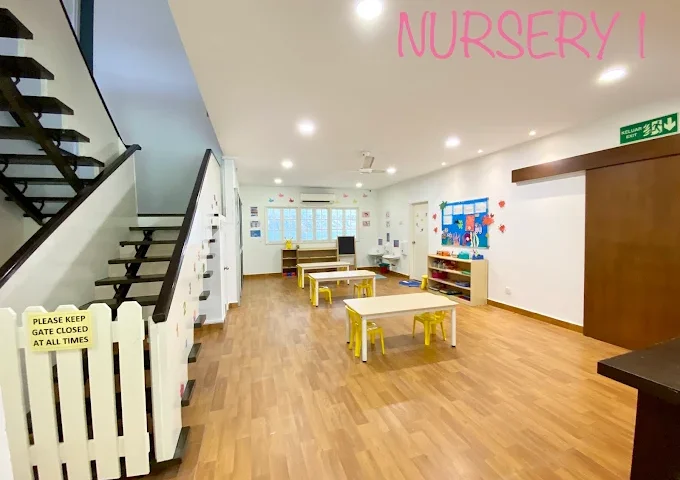
SummerFields Preschool: Strong Foundations for Life-long Learning
Location – 3, Jalan Batai, Bukit Damansara, 50490 Kuala Lumpur, Wilayah Persekutuan Kuala Lumpur, Malaysia
Website – https://summerfields.com.my/
Contact – +60 3-2011 0188
In the earliest years, education does not imply academic preparations exclusively. On the contrary, education at this stage should be primarily aimed at building up interest towards learning. SummerFields Preschool strives to achieve just that. The institution’s learning approach helps to prepare kids for their future studies as well as to teach them important life skills.
High-quality Early Childhood Education
Having earned its reputation for being a high-quality learning institution, SummerFields Preschool offers preschool children a learning atmosphere characterized by constant explorations and discoveries. The school provides young learners with solid academic knowledge along with plenty of play-based and inquiry-driven activities aimed at preparing them for future achievements.
A Thematic Curriculum for Discovery
The thematic curriculum developed for SummerFields Preschool learners includes over 750 integrated learning activities and covers literacy, numeracy, science, creative arts, music, movement, sensory play, and social and emotional development.
The learning process is based not on traditional instruction techniques, but on storytelling, role-playing, conducting experiments, doing collaborative projects, and making interesting discoveries with teachers’ help. Such a strategy gives children a possibility to participate actively in the learning process, gaining critical thinking skills at an early age.
Inspired both by Malaysian and Australian ECE approaches, the curriculum implemented in the institution is a perfect example of effective integration of academic and creative aspects of preschool learning.
Combining Academic Excellence and Balanced Holistic Development
One of the key features of SummerFields Preschool education strategy is a careful balance between high academic level and holistic child development.
Phonics instruction, early reading and writing lessons, and basic numeracy classes are among priorities in children’s study schedule. However, the program is still balanced and fun since teachers are aware that preschool kids absorb knowledge best when they are engaged, motivated, and emotionally comfortable with the learning situation. Thus, SummerFields Preschool promotes a joy of learning that can last for many years.
Celebrating Diversity and Promoting Inclusiveness
The present-day society needs people who are culturally open-minded and sensitive to other people’s feelings. That is why SummerFields Preschool strives to create an atmosphere of inclusiveness that is welcoming to families from various cultural backgrounds.
The preschool curriculum involves many different activities aimed at introducing kids to different cultures and their specific traditions through stories, songs, celebrations, and themed events. All this makes children become more empathic and open-minded from an early age.
The school promotes multilingualism by providing children with exposure to English, Bahasa Malaysia, and Mandarin. This enables them to develop a strong foundation in multiple languages and supports families in selecting the most suitable primary school pathway within Malaysia’s diverse multilingual education system.
First and foremost, all children regardless of their background and language are accepted, treated with respect, and encouraged to be included.
Individualization for Optimal Learning and Personal Progress
SummerFields Preschool teachers pay special attention to each student’s peculiarities as learners have different styles of knowledge acquisition. While some prefer physical activities and explorations, others are more inclined to watch, discuss, or draw things.
Teachers observe children and adapt teaching techniques to their individual preferences in terms of small group classes, direct instruction, practical activities, and additional support. For students of foreign origin, there are many visual techniques such as pictures, songs, and storytelling
This way, the institution enables children to be included in activities effectively and boost self-esteem.
Emphasizing Physical and Emotional Well-Being
The psychological state of children is of crucial importance when it comes to successful learning. Thus, SummerFields Preschool takes care of children’s emotional state, offering them an atmosphere of care, trust, and safety.
Developing a trusting relationship with students and supporting children with their social and emotional development, teachers promote their well-being by organizing daily routines that give opportunities to develop independence and self-help skills.
Social and emotional learning is integrated into daily routine through teamwork, communication training, activities involving the idea of sharing, and problem-solving exercises. Additionally, children can learn about expressing their emotions properly and forming healthy relationships.
Taking care of children’s health is one of the institution’s priorities. Outdoor activities, exercise classes, and health-related information help preschoolers grow healthy and happy.
Encouraging Creativity and Developing Critical Thinking Skills
Creativity and innovative approaches to solving problems are important skills that children will need in the future. This is the reason for implementing them into thematic learning activities offered by the SummerFields Preschool.
Children experiment with science, conduct sensory investigations, solve construction puzzles, role-play, and do many other things that encourage them to be inquisitive and creative. Children are involved in themes such as “Our Environment,” “Inventions and Discoveries,” and “Our Universe” to promote the habit of asking questions and predicting results.
Engaging children in open-ended activities and enabling them to try different ways to solve tasks, teachers promote critical thinking skills and foster curiosity among students.
Using Technology Wisely
Though modern preschool education is hard to imagine without technologies, SummerFields Preschool maintains a balance between traditional methods of teaching and those based on the use of modern means. Technologies are applied wisely for enriching class activities.
Thus, the institution uses educational videos, multimedia presentations, interactive songs, games, and other technological tools to facilitate children’s learning process. Additionally, there is an app developed specially for communication with parents. Teachers inform families about children’s progress via announcements, updates, reports, and notifications.
It should be emphasized that the school’s philosophy is based on using technologies only as an enrichment to the traditional ways of learning including hands-on activity, outdoor play, and communication.
Preparing for the Future: Vision of Future Development
As SummerFields Preschool keeps on growing, it plans its development taking into account current achievements and priorities. Thus, the following initiatives are considered for implementation in the near future.
Development of the already existing thematic curriculum and improvement of teacher development programs are expected to be realized successfully. Moreover, further educational opportunities for scaling learning and franchising will be explored.
Through a combination of the most valuable approaches and new methods, the school can continue providing children with strong educational bases.
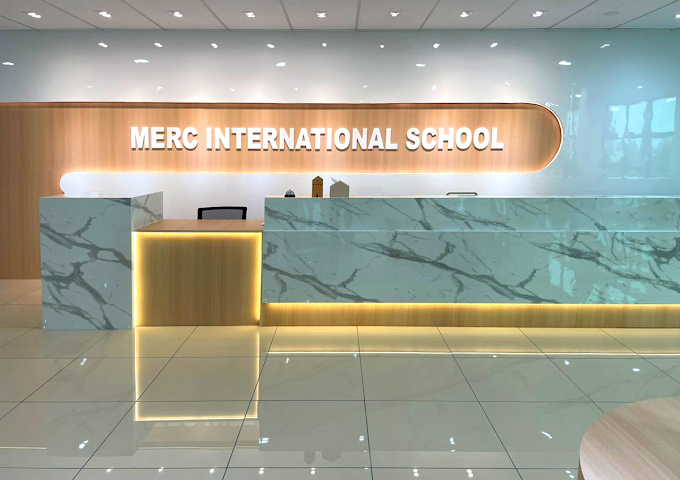
Merc International School: Empowering Future Leaders Through Excellence and Innovation
Location – 7A, 7-1A, 7B, 7-1B, 7C, 7, 1C, Jln Zabedah, Kampung Pegawai, 83000 Batu Pahat, Johor Darul Ta’zim, Malaysia
Website – http://www.mercinternationalschool.com/
Contact – +60 17-720 5254
In this ever-changing world, education is required not just for providing academic knowledge but for helping the individual develop all the necessary skills and values needed to succeed in an increasingly connected global society. Such is the philosophy of Merc International School, located in Batu Pahat, Johor.
Founded in 2016, Merc International School has already acquired a reputation of an excellent and dynamic Cambridge International School that focuses not only on education but leadership development as well. With the Primary and Secondary levels of education that follow the internationally recognised curriculum of Cambridge, the school offers its students solid foundations for future life and develops necessary 21st-century competencies.
Under the leadership of the principal Lance Chan and chief operating officer Goh Pei Hua, Merc International School cultivates confident learners, responsible citizens and future leaders.
Creating Meaningful Learning Experiences
At Merc International School, students engage in active learning that goes beyond the process of obtaining knowledge.
Using student-centered approaches, inquiry-based learning, project-based activities, collaborative learning, and experiential education, the school encourages the students to ask questions, investigate ideas, find solutions to problems, and apply their knowledge in real-life situations.
Thus, besides promoting academic success, such approaches develop critical thinking, creativity, communication, and teamwork skills.
By fostering independent learning of students, Merc International School helps them gain confidence and fosters passion for learning.
A Community Built on Respect and Inclusion
As an international school, Merc appreciates diversity as its biggest advantage.
Children from different cultures, backgrounds and education receive the opportunity to study in an atmosphere of mutual respect and tolerance. Multicultural awareness is promoted through daily interaction with each other, collaborative learning and a learning culture encouraging students to understand different viewpoints.
Thus, an inclusive environment helps to foster empathy, global awareness and interpersonal skills that will benefit students in their future lives and career.
Every child studying at Merc International School feels valued and empowered to reach his or her potential.
Learning Beyond the Classroom
The school is convinced that sometimes the best way to learn something is through real-life experience.
To provide their students with such valuable experience, Merc International School cooperates with various organisations, including Universiti Tun Hussein Onn Malaysia (UTHM), Putra Specialist Hospital Batu Pahat, Toastmasters International, local churches, ACCCIM and many others.
Through participating in different educational events, leadership programmes, health awareness campaigns, public speaking and volunteering, the students can connect classroom learning with real world issues and develop different leadership and communication skills.
Supporting Every Student’s Journey
Realising that everyone learns differently, Merc International School uses an individualised approach to education.
Teachers use differentiation strategies to address different learning styles, abilities and interests of the children. Students get extra support when needed and are offered additional challenges when they are ready for them. Such an approach guarantees that every learner can progress successfully.
Besides that, strong relations between teachers and parents help to promote the success of students. Parent-teacher conferences, reporting about the students’ academic results and consultations help the families to stay involved in the learning process of their children.
Emphasis on Well-Being and Character Development
The academic success of students becomes really significant when they feel emotionally healthy and satisfied. That is why at Merc International School, special attention is paid to the development of well-being and character of the learners.
Through using mentoring programmes, leadership initiatives, sports activities, motivational talks and character education, the school encourages students to be resilient, ethical, empathic and confident.
The collaboration between teachers and parents promotes the development of the children both academically and personally. Thus, a positive learning environment is created to promote the comprehensive development of learners.
Preparing Students to the Digital Age
Technology plays an important role in modern education, and Merc International School wisely uses digital tools during the learning process.
The students use online materials, multimedia presentations, research platforms and other educational technologies that foster learning and develop digital literacy skills.
Combining technology and good teaching techniques, the school prepares students to navigate in a digitally oriented world and fosters critical thinking and adaptability.
Commitment to Academic Excellence
As a Cambridge International School, Merc is dedicated to maintaining high academic standards and pursues them through the curriculum planning, regular assessment and teachers’ professional development.
Among the achievements of the school is a student who received a World Top Ranking Award in Chinese as a Foreign Language. This proves the high standards of teaching and learning at Merc.
Merc International School was also awarded The Leading International School Excellence Award 2026 at the 9th Malaysian Education and Learning Summit.
Vision for the Future
Focusing on being among the leading international schools in Malaysia, Merc International School is working towards achieving not only high academic standards but also promoting character formation and innovation.
Based on the idea of nurturing future leaders and global citizens, Merc International School is creating new opportunities for the development of the children.
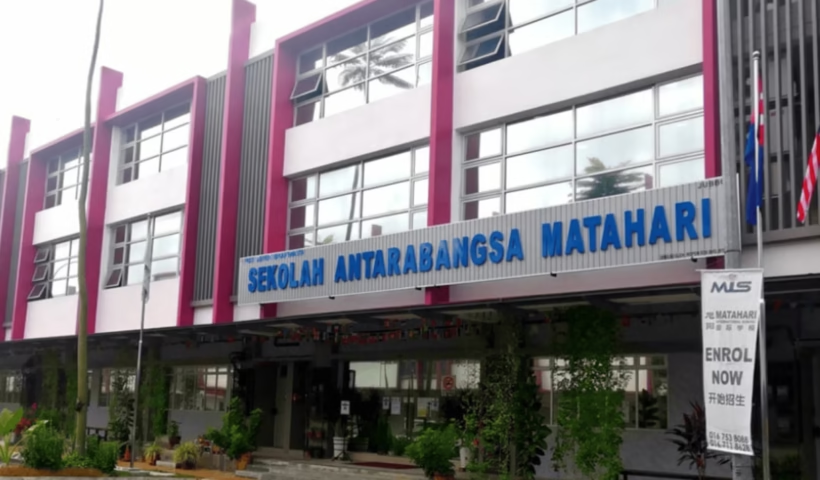
Matahari International School: Balancing Excellence, Inclusion, and Student Well-Being
Location – Jalan Iskandar Putri 1/4, 81550 Gelang Patah, Johor Darul Ta’zim, Malaysia
Website – https://iem.edu.my/international-school/
Contact – +60 16-753 8088
With the increasing level of competitiveness and the ever-growing complexity of the contemporary world, modern schools find themselves facing the task of creating an environment in which learning fosters success without excluding inclusiveness and wellbeing. In its turn, Matahari International School embraces all three criteria as key principles that define the nature of education offered at this educational establishment.
Based on a comprehensive vision according to which students are supposed to develop not only the necessary skills and competencies but also a range of attitudes that will make them happy individuals, compassionate citizens, and constructive contributors to the global community, Matahari International School provides students with an all-encompassing experience in all these spheres.
Fostering Diversity, Equity, and Inclusivity
It can be claimed that inclusiveness plays a pivotal role in the philosophy adopted at Matahari International School since this institution strives to create conditions in which students of various origins and nationalities feel included, supported, and valued. As part of such activities, teachers are expected to use inclusive language and introduce diverse materials to class lessons. Besides, it becomes possible to foster an atmosphere of mutual tolerance and respect in the school community.
As a result, the learning process at Matahari International School helps to raise children into global citizens who are willing to treat others respectfully and empathetically.
Meeting the Needs of Every Learner
It should be noted that Matahari International School is aware of the fact that learners possess distinct learning profiles, and each individual deserves to receive adequate assistance based on his or her individual needs and preferences. At Matahari International School, high-quality learning processes are supported by a variety of inclusive techniques.
Differentiated learning is implemented alongside the usage of scaffolding and flexible grouping. Moreover, Matahari International School develops personalized intervention plans for those who need extra attention. Among other techniques employed at this school, special mention should be made of EAL programs that facilitate students’ language acquisition within the framework of general education.
Thus, Matahari International School makes it possible for all its learners to achieve desired goals.
Academic Excellence with Purpose
Another feature inherent to Matahari International School is the existence of a strong connection between rigor and support. It means that students do not need to choose what is more important because both academic rigor and student support help learners become successful and well-developed.
By following internationally accepted Cambridge standards, Matahari International School provides a challenging yet manageable learning process. Assessment is applied in order to monitor the progress of students and adjust further actions accordingly. Moreover, students are encouraged to demonstrate excellence and take mistakes for granted.
The combination of rigor and support allows for fostering resilience and perseverance.
Developing Creativity and Critical Thinking
Apart from providing learners with opportunities to obtain theoretical knowledge and develop skills required in different subject areas, Matahari International School pays much attention to the promotion of critical and creative thinking. This goal is achieved by encouraging students to perform certain tasks and activities.
So, in science classes, students are supposed to design an investigation and analyze results. In humanities, they have to participate in discussions, analyze arguments and counterarguments, and examine diverse perspectives. Similarly, students’ creativity is fostered during creative classes like arts, music, and drama.
Thus, Matahari International School makes sure that its graduates can perform not only in class but also outside it.
Caring About Wellbeing and Development
While academic success can be defined as a result of learners’ achievements, it can hardly serve as an indicator of their wellbeing and mental state. Therefore, Matahari International School pays much attention to the issue of students’ wellbeing as well as personal development. The pastoral care program adopted at this educational institution presupposes individualization and close collaboration with students.
Moreover, the well-being of each student is discussed with teachers who provide them with advice. Finally, Matahari International School introduces well-being education as one of the components of its personal development program.
As a result, students feel comfortable and safe when studying at this school.
Strengthening Learning Through Partnerships and Community
One more feature that distinguishes Matahari International School from other institutions is the active search for links with the wider community. As part of such activity, the school maintains partnerships with numerous organizations and service providers which enable students to get engaged in enrichment, volunteering, and other projects. In addition to that, Matahari International School establishes contacts with parents and keeps them informed about their children’s progress.
Thus, learners receive consistent support from various sources.
Using Technology Wisely
It goes without saying that nowadays many educational establishments are keen on introducing technologies in their educational process. However, this strategy can bring both advantages and drawbacks. Therefore, Matahari International School adopts a wise approach towards integrating technology into classes.
On the whole, it serves as a helpful tool for assessing students’ performance, designing personalized learning paths, providing learners with timely feedback, and fostering digital literacy skills. At the same time, it should be pointed out that Matahari International School does not allow technology to replace high-quality teaching.
Looking Ahead
As Matahari International School continues to evolve, its future is guided by a clear and purposeful vision. The school remains committed to strengthening inclusive practices, investing in professional development for staff, and expanding opportunities for student leadership and voice.
By maintaining a balance between excellence and equity, the school seeks to ensure that every learner is challenged, supported, and inspired to reach their full potential.
Through its unwavering focus on academic achievement, personal development, inclusion, and well-being, Matahari International School is preparing students not only for examinations and future careers but also for meaningful lives as responsible and compassionate members of society.

Australian International School Malaysia: Prepares Confident Learners for a Changing World
Location – 22, Jalan Anggerik, Mines Wellness City, 43300 Seri Kembangan, Selangor, Malaysia
Website – https://www.aism.edu.my/
Contact – +60 3-8684 1555
In an increasingly complex world, academic achievement alone is no longer enough. Today’s students need the confidence to think independently, the resilience to adapt to change, and the skills to thrive in a global environment.
At Australian International School Malaysia (AISM), these qualities are developed through a balanced educational approach that combines academic excellence, wellbeing, and personalised learning. Guided by The Australian Way, AISM nurtures confident learners who are prepared not only for success in school, but for life beyond the classroom.
Located in the heart of Kuala Lumpur, AISM offers a complete Australian education pathway from Early Years to Pre-University, providing students with a seamless learning journey that supports both academic achievement and personal growth.
The Australian Way: Learning Beyond Academic Success
At the core of the AISM experience is a commitment to developing the whole child.
Students are encouraged to be curious, independent thinkers who take ownership of their learning. Through inquiry, collaboration, and reflection, they develop the confidence to ask questions, solve problems, and embrace new challenges.
This balanced approach ensures students not only achieve strong academic outcomes, but also develop the communication, leadership, and interpersonal skills needed to succeed in an ever-changing world.
As the school proudly says, “We shine when our students shine.”
Academic Excellence with a Globally Recognised Curriculum
AISM delivers the Australian Curriculum, recognised worldwide for its focus on critical thinking, creativity, and deep conceptual understanding.
The school’s strong academic performance reflects this commitment to excellence. Students consistently achieve outstanding results in international and Australian benchmark assessments, including PAT and ISA testing, while graduating students continue to achieve impressive outcomes in the New South Wales Higher School Certificate (HSC).
In 2025, AISM celebrated 17 Distinguished Achievers, a 100% HSC pass rate, and results that placed many graduates among the top-performing students globally. These achievements have opened pathways to leading universities in Australia, the United Kingdom, North America, and beyond.
Importantly, academic success at AISM is supported through personalised guidance and a culture that values growth, progress, and confidence alongside achievement.
Supporting Every Learner
AISM recognises that every student learns differently.
From its Early Learning Centre, inspired by the Reggio Emilia philosophy, through to Senior School, students benefit from personalised learning experiences that support their individual strengths and interests.
For students developing English language proficiency, the Academic English Pathway (AEP) provides targeted support that enables learners to build confidence and successfully transition into mainstream classes. The programme helps students strengthen their academic English while remaining actively engaged in school life and learning.
This commitment to personalised support ensures every student is empowered to achieve their full potential.
Learning Beyond the Classroom
Education at AISM extends far beyond traditional classroom learning.
Students participate in a rich range of co-curricular and wider learning opportunities that encourage them to explore new interests, develop leadership skills, and apply their learning in authentic contexts.
From international academic competitions such as the World Scholar’s Cup and Model United Nations, to performing arts productions, sporting achievements, and service initiatives, students are encouraged to step outside their comfort zones and discover their strengths.
Partnerships with universities and industry experts further enrich learning by exposing students to future career pathways and real-world experiences.
These opportunities help students develop adaptability, collaboration, and confidence—qualities that are increasingly valued in higher education and future workplaces.
A Community Where Everyone Belongs
One of AISM’s greatest strengths is its vibrant and welcoming community.
Representing a diverse range of nationalities and cultures, the school provides an environment where students learn alongside peers from around the world while developing a genuine appreciation for different perspectives.
Families play an active role in school life through initiatives such as the Parent Hub, community events, and volunteer opportunities, creating strong partnerships between home and school.
This sense of belonging helps students feel supported, valued, and confident to take on new challenges.
Preparing Students for Global Futures
As the world continues to evolve, AISM remains focused on preparing students for the opportunities and challenges ahead.
By combining academic rigour, personalised learning, wellbeing, and meaningful wider learning experiences, the school equips students with the knowledge, skills, and character needed to thrive in an interconnected world.
At AISM, education is about more than achieving strong results. It is about helping every student develop the confidence to pursue their ambitions, contribute positively to their communities, and create their own pathway to success.
Because when students are given the opportunity to thrive, their potential turns into achievement.